What Type of Fire Extinguishers Does My Business Need?
Fire safety is a legal responsibility for every business, but one of the most common questions employers ask is: “What type of fire extinguishers do I actually need?”
The answer isn't always straightforward. The right fire extinguishers for your premises will depend on the risks identified within your Fire Risk Assessment, the type of work you carry out and the materials or equipment present in your workplace. UK fire safety guidance requires businesses to provide appropriate firefighting equipment based on the risks identified in the building.
Whether you run an office, warehouse, retail premises, workshop or commercial kitchen, understanding the different types of fire extinguishers can help keep your employees, visitors and business protected.
Why Do Businesses Need Fire Extinguishers?
Under UK fire safety legislation, employers and those responsible for premises must take appropriate measures to reduce fire risks and provide suitable firefighting equipment where necessary. The type and quantity of extinguishers should be determined through a Fire Risk Assessment.
However, it's important to remember that fire extinguishers should only be used when:
• The fire is small and contained
• Staff have received suitable training
• It is safe to do so
• There is always a clear escape route available
The priority should always be the safe evacuation of people from the building. As stated above, employees should only tackle a fire if they have been appropriately trained and it is safe to do so.
Understanding the Different Fire Classes
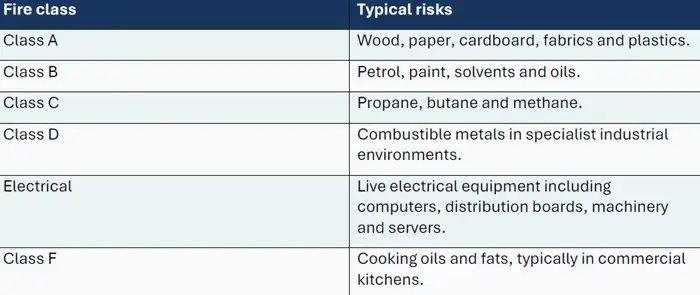
Fires are categorised into different classes depending on the materials involved.
Class A fires involve common combustible materials such as wood, paper, cardboard, fabrics and plastics, while Class B fires are caused by flammable liquids including petrol, paints, solvents and oils.
Class C fires involve flammable gases such as propane, butane and methane, and Class D fires relate to combustible metals found in specialist industrial environments. Electrical fires can occur in live equipment such as computers, servers, machinery and distribution boards. Class F fires involve cooking oils and fats, making them a particular risk in commercial kitchens.
The Main Types of Fire Extinguishers
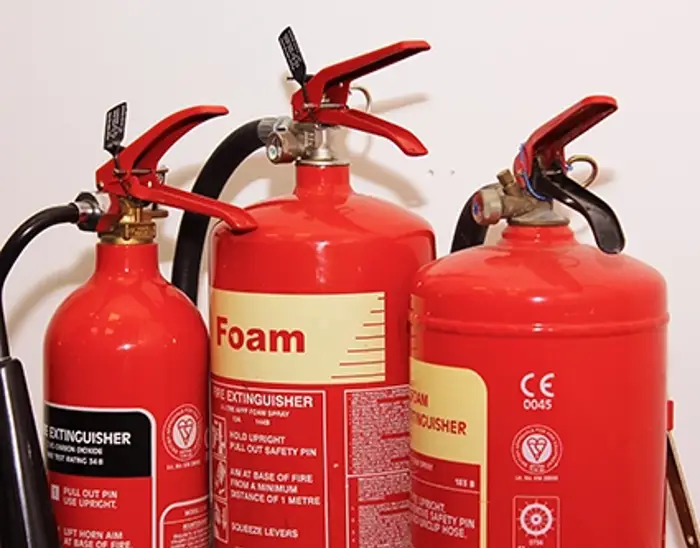
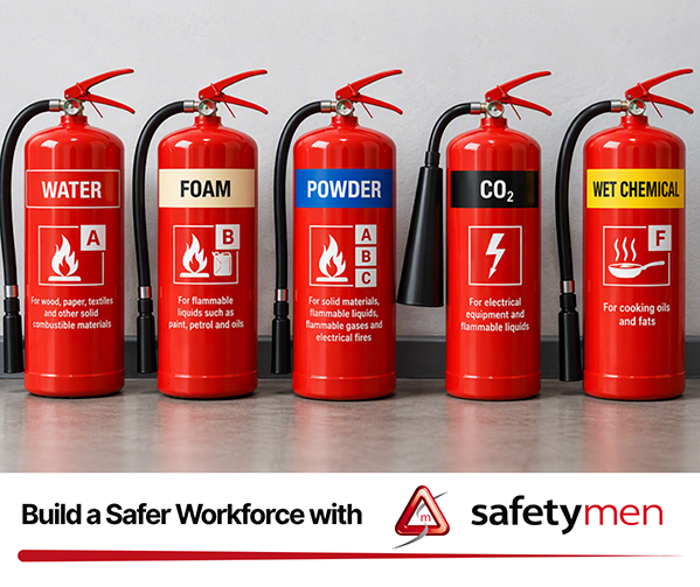
Water Fire Extinguishers (Red Label): Suitable for Class A fires. Common in offices, shops, schools and reception areas. Do not use on electrical, flammable-liquid or kitchen-oil fires. Water cools burning material and is effective on common combustibles.
Foam Fire Extinguishers (Cream Label): Suitable for Class A and Class B fires. Common in workshops, garages, retail premises and warehouses. Foam creates a blanket over flammable liquids, helping prevent re-ignition while cooling the fire.
CO2 Fire Extinguishers (Black Label): Suitable for electrical equipment and some Class B fires. Common in offices, server rooms, plant rooms and areas containing electrical equipment. CO2 leaves no residue, making it suitable around sensitive electronics.
Dry Powder Fire Extinguishers (Blue Label): Suitable for Class A, B and C fires and electrical fires. Often used in vehicle depots, industrial sites and outdoor environments. Powder can reduce visibility and cause breathing difficulties indoors, so it is generally less suitable for enclosed workplaces.
Wet Chemical Fire Extinguishers (Yellow Label): Suitable for Class F fires involving cooking oils and fats. Common in restaurants, cafes, takeaways and school kitchens. Essential where deep-fat fryers or significant cooking-oil hazards are present.
Which Fire Extinguishers Does My Business Need?
While every business should have its own Fire Risk Assessment, the following provides a basic guide.
Workplace | Typical considerations |
Offices | Water extinguishers for Class A risks and CO2 extinguishers near electrical equipment. |
Warehouses | Water or foam extinguishers, CO2 for electrical equipment, with additional equipment depending on stored materials. |
Workshops and garages | Foam and CO2 extinguishers, plus specialist equipment where flammable liquids or gases are stored. |
Commercial kitchen | Wet chemical extinguishers, CO2 for electrical equipment, with additional equipment depending on other workplace risks. |
A fire risk assessment will help determine the appropriate types, quantities and locations of fire extinguishers for your workplace, based on the specific activities, equipment and materials present.
Fire Extinguishers Are Just One Part of a Safe Workplace
Having the correct extinguishers is important, but effective fire safety goes much further. Businesses should also ensure:
• Fire Risk Assessments are up to date, and regularly reviewed
• Escape routes remain clear
• Fire alarms are maintained
• Emergency procedures are documented
• Staff receive appropriate fire safety training
• Fire Marshals are appointed where required
Good fire safety is about creating a workplace where people understand the risks, know how to respond during an emergency and feel confident in the procedures designed to keep them safe.

Looking for Help with Workplace Fire Safety?
Choosing the right fire extinguishers doesn't need to be complicated, but it does need to be based on the specific risks within your business.
Safetymen helps businesses across Essex and Suffolk improve workplace fire safety by offering practical fire safety training, and fire marshal courses.
Get in touch with Safetymen today to discuss your fire safety training requirements.