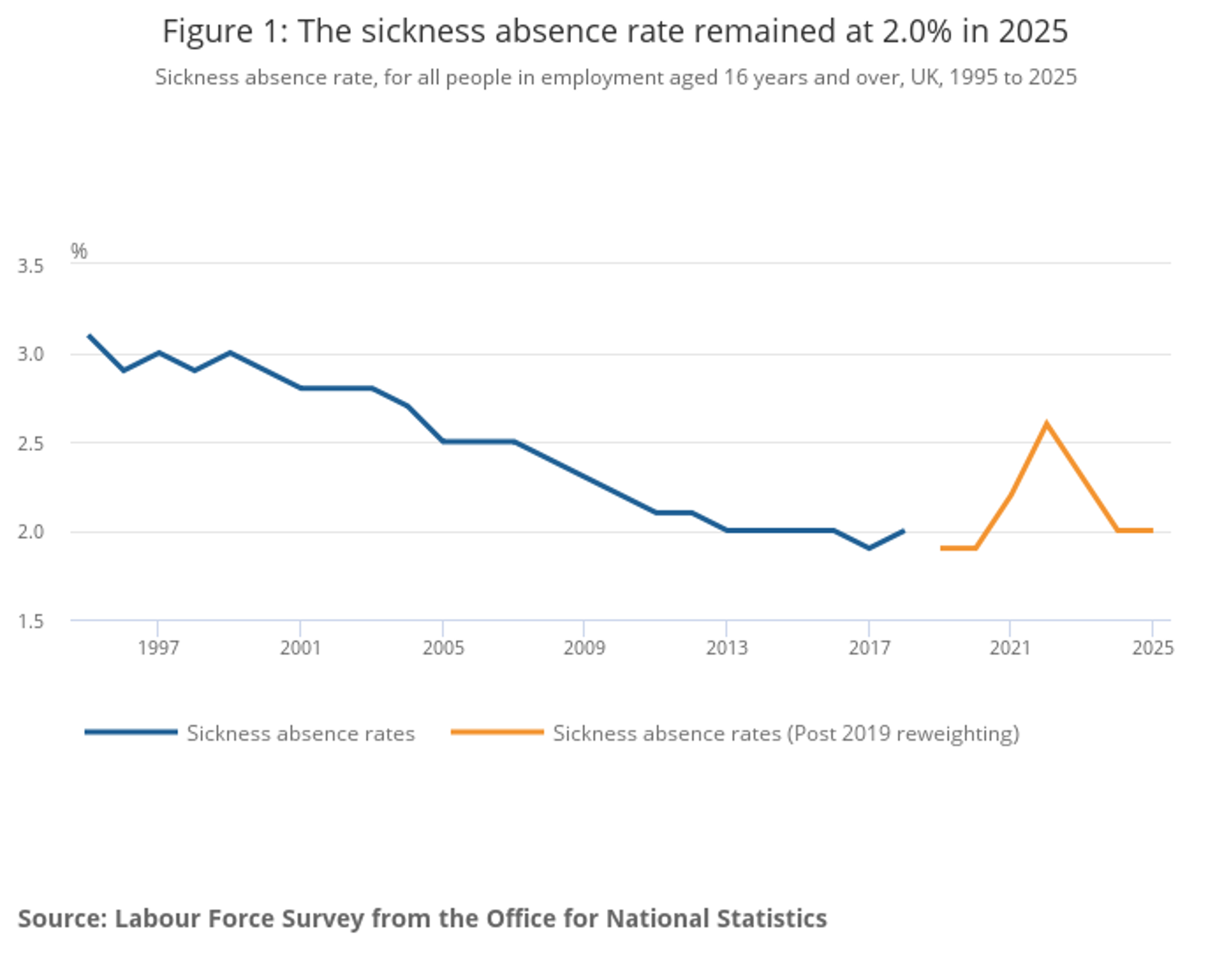
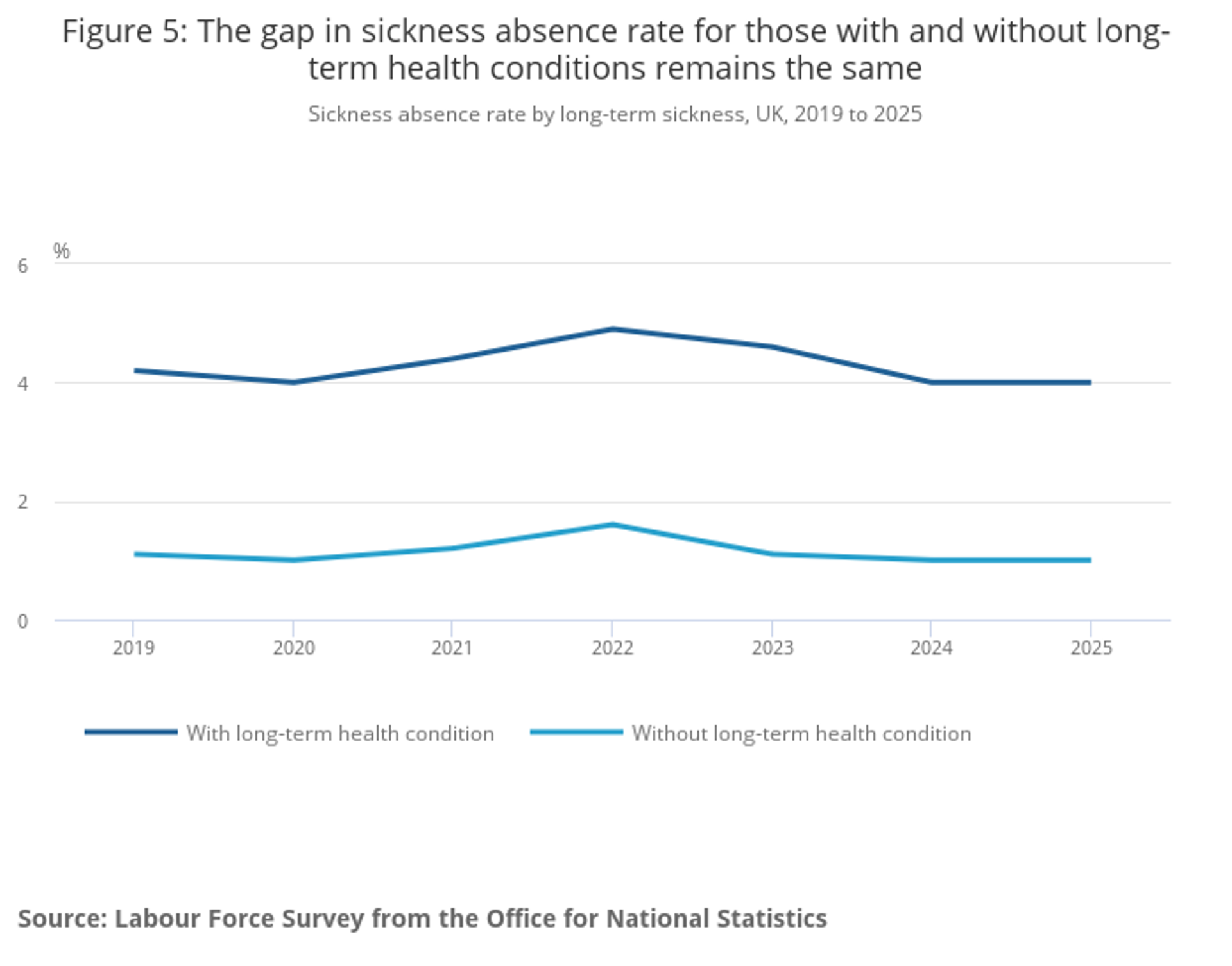
The ONS reports that the UK sickness absence rate stood at 2.0% in 2025, unchanged from 2024. [ons.gov.uk]
While stability may sound positive, the wider context tells a different story:
148.8 million working days were lost due to sickness or injury in 2025 [ons.gov.uk]
That equates to 4.4 days per worker, unchanged year-on-year [ons.gov.uk]
Absence remains higher than pre-pandemic levels, with nearly 10 million more days lost than in 2019 [ons.gov.uk]
In short, sickness absence has plateaued at a historically elevated level. For businesses, this indicates a persistent productivity and wellbeing challenge rather than a temporary spike.
What’s Driving Absence?
The data reveals a familiar but important mix of causes:
Minor illnesses (colds, flu): 30.4%
Musculoskeletal (MSK) conditions: 14.6%
Mental health conditions: 8.9%
Gastrointestinal issues: 6.6% [hrconnect.org.uk]
Minor illnesses remain the most common cause, but MSK and mental health issues are particularly significant because they are more likely to drive longer-term absence.
From a safety and risk management perspective, these categories are especially important:
MSK issues often stem from poor ergonomics, manual handling risks, or inadequate workplace design
Mental health conditions are linked to stress, workload, job design, and organisational culture
Together, these causes represent a major opportunity for prevention-led strategies.
Who Is Most Affected?
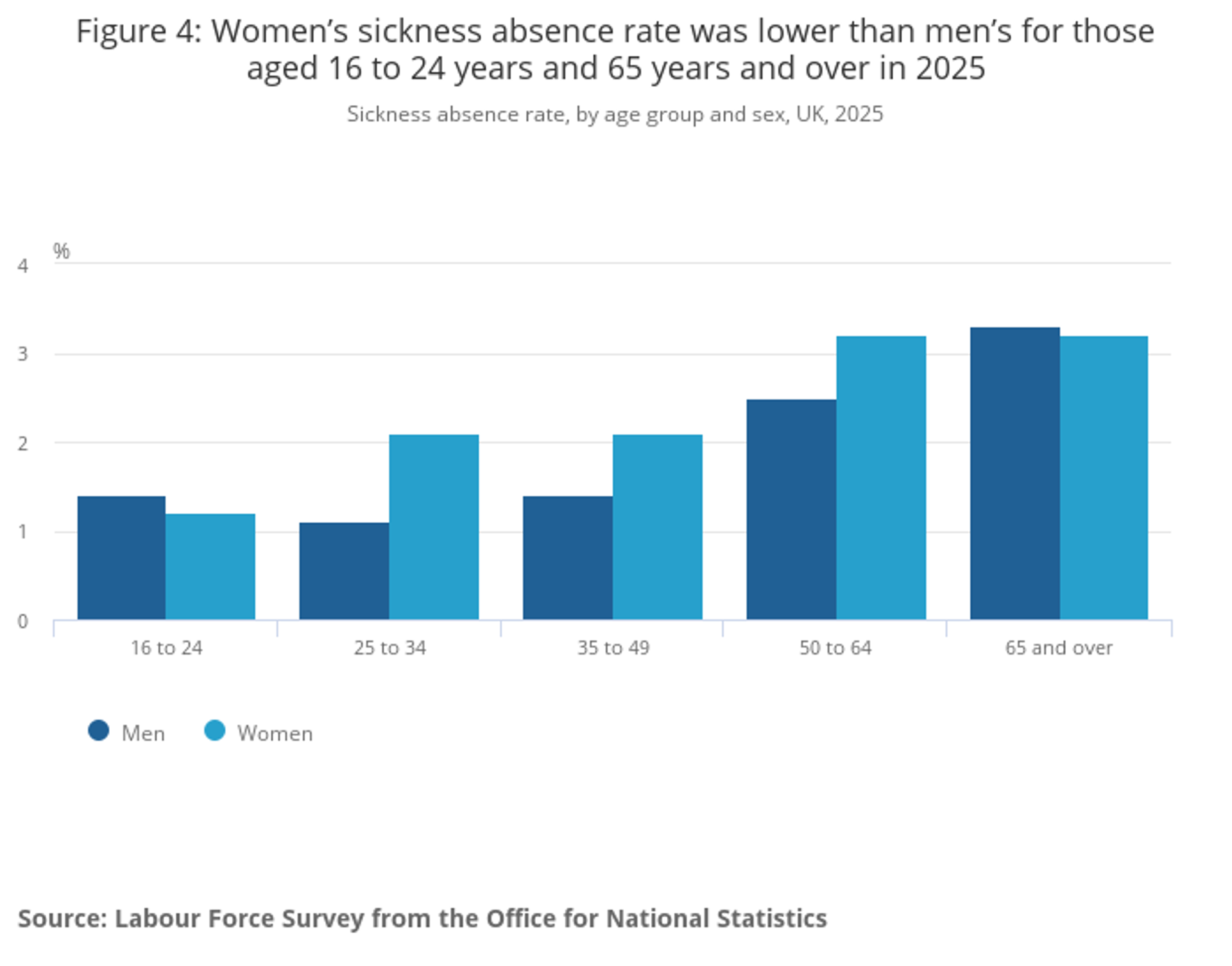
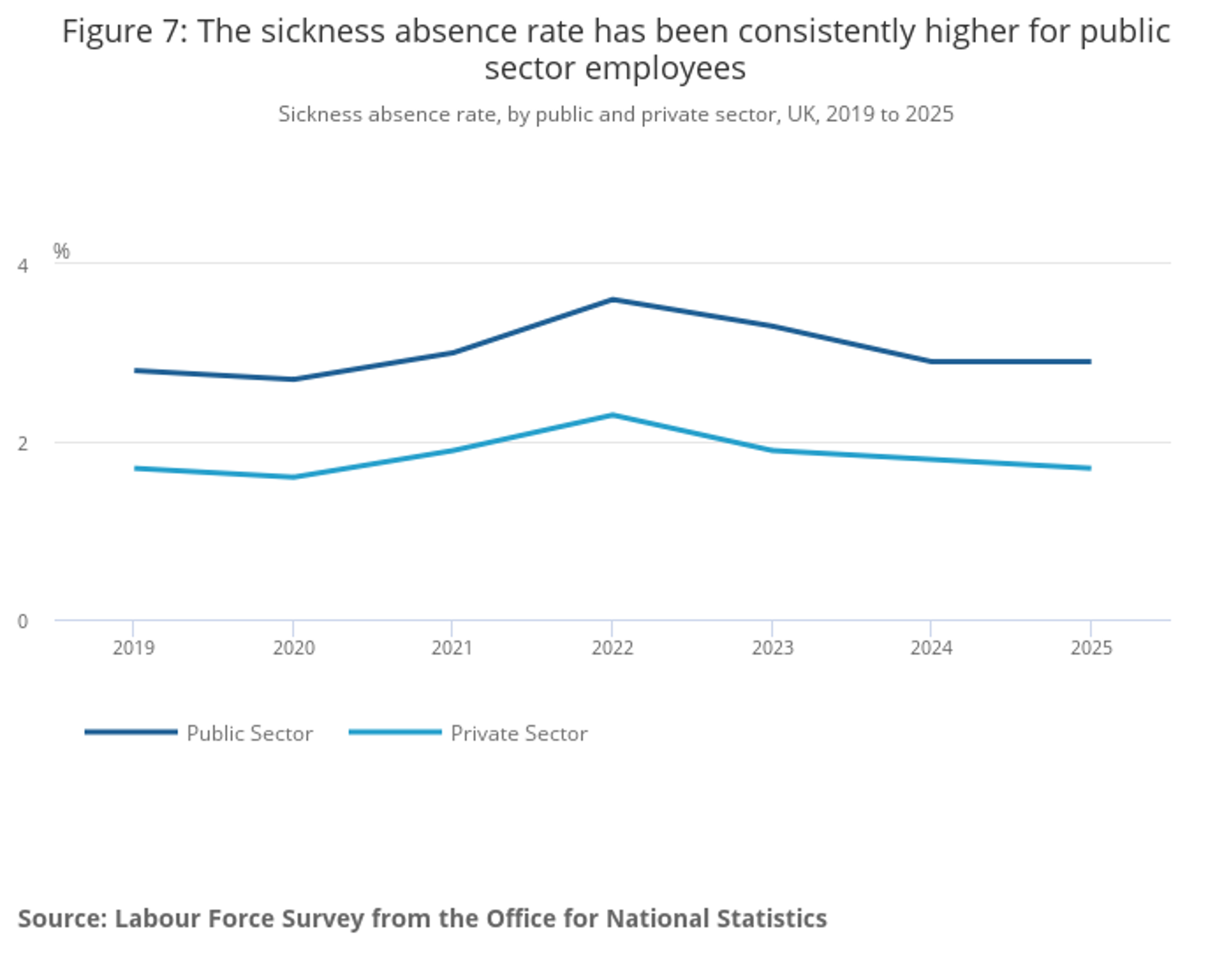
The ONS data highlights consistent inequalities in sickness absence rates. Those most likely to be affected include:
Women
Older workers
Individuals with long-term health conditions
Part-time workers
Public sector employees [ons.gov.uk]
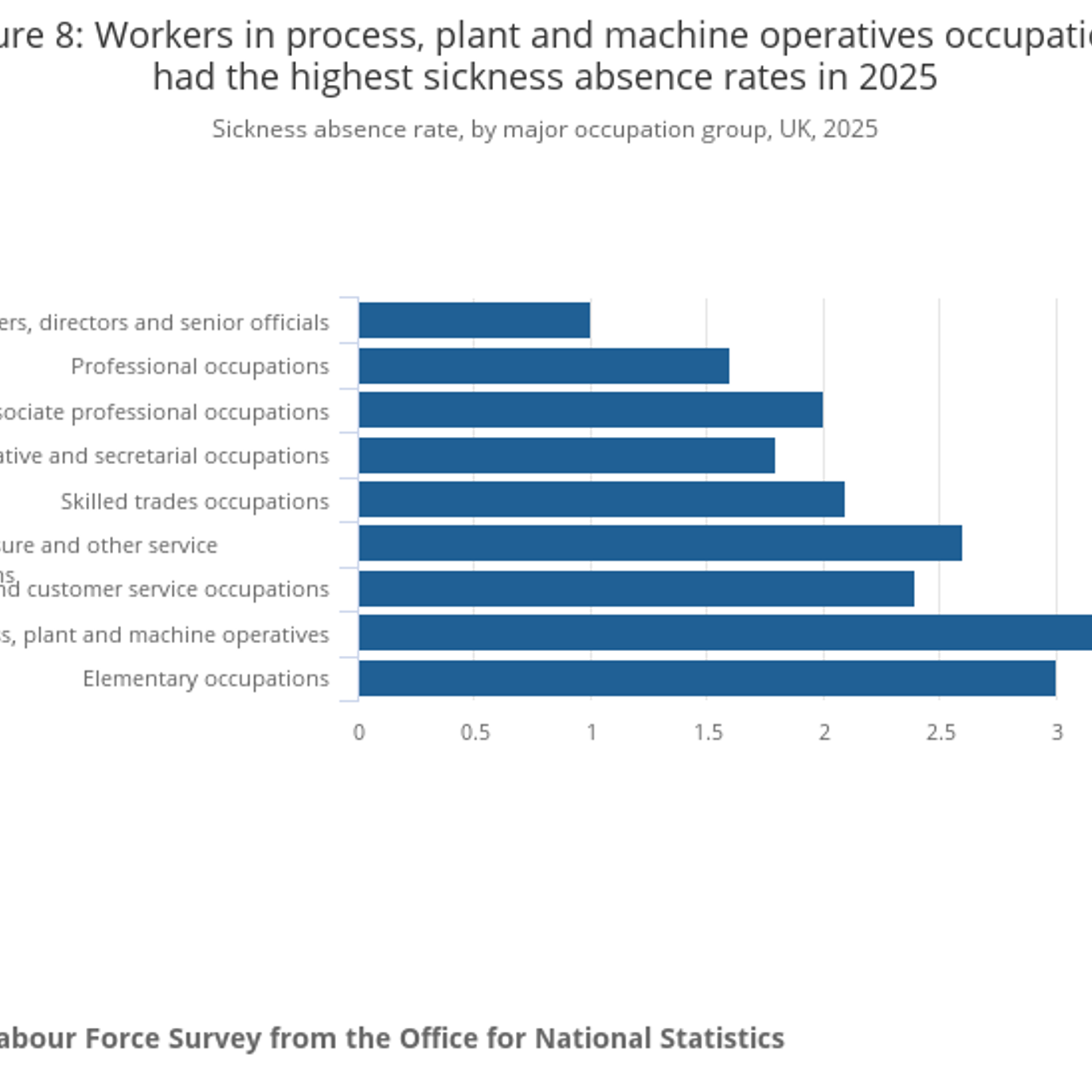
There are also notable occupational differences. Workers in process, plant, and machine operative roles experience higher absence rates, while senior managers have the lowest. [personneltoday.com]
These patterns reinforce a clear message: risk is not evenly distributed across the workforce.
For employers, this means targeted interventions—rather than one-size-fits-all wellbeing programmes—are essential.
A Post-Pandemic Reality
Although absence has fallen from peaks seen during and immediately after COVID-19, it remains structurally higher than before the pandemic.
The ONS notes that absence increased significantly in 2021 and 2022 due to:
Reduced remote working
End of furlough
Ongoing COVID-19 impacts and new variants [ons.gov.uk]
Even as those immediate pressures have eased, underlying drivers—such as chronic health conditions, long waiting times for treatment, and mental health challenges—continue to sustain higher absence levels.
This suggests the UK has entered a “new normal” of workforce health risk.
The Cost to Business
The impact of sickness absence is not just operational—it’s financial.
Recent analysis estimates that absence cost UK businesses £11.8 billion in lost profits in 2025, with SMEs disproportionately affected.
For smaller organisations, even short-term absences can have a major impact due to limited resource and cover. Larger organisations may be better able to absorb this through structured health programmes—but they are not immune to the productivity loss.
What This Means for Health & Safety Strategy
The latest ONS data reinforces the need to rethink how organisations approach health, safety, and wellbeing. The key takeaway: absence is no longer just an HR issue—it’s a core business risk.
1. Prevention Must Be a Priority
Reactive absence management is no longer enough. Organisations should focus on:
Proactive risk assessments
Early intervention strategies
Monitoring leading indicators (not just absence rates)
2. Address Musculoskeletal Risks
Given the scale of MSK-related absence, employers should:
Review manual handling practices
Improve workstation ergonomics
Provide training and early reporting systems
3. Strengthen Mental Health Support
Mental health remains a significant contributor to absence:
Train managers to identify early signs of stress
Promote open conversations around wellbeing
Provide access to support services
4. Target High-Risk Groups
Uniform policies won’t address unequal risk:
Tailor interventions for older workers and those with long-term conditions
Consider flexible working options
Ensure inclusion in health and wellbeing strategies
5. Integrate Health Into Business Strategy
With billions lost annually, workforce health should be treated as a strategic priority:
Link health metrics to productivity and performance
Invest in occupational health and wellbeing programmes
Align safety, HR, and leadership efforts
Final Thoughts
The ONS 2025 sickness absence report sends a clear message: while the headline figures have stabilised, the underlying challenges are far from resolved.
For UK employers, this is a call to action. The organisations that succeed in the coming years will be those that go beyond managing absence and instead focus on preventing it—through safer, healthier, and more supportive workplaces.
At SafetyMen, we believe that proactive health and safety management is the foundation of a resilient workforce. If your organisation is looking to reduce absence and improve workforce wellbeing, now is the time to act.
Need support with workplace health and safety? Get in touch with SafetyMen to find out how we can help you build a safer, healthier workplace.