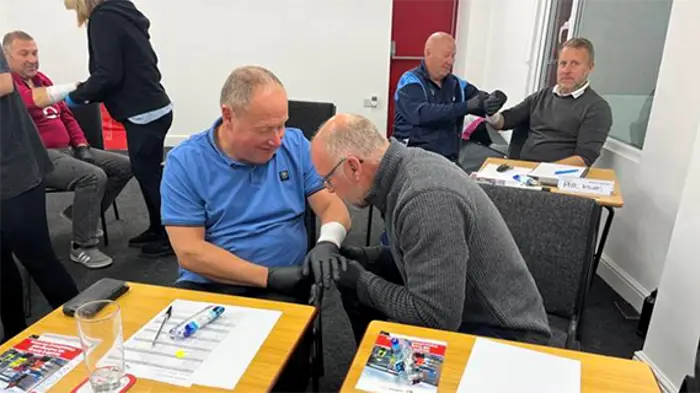
This article provides general awareness. In a life-threatening emergency, call 999 and follow the call handler’s instructions.
Looking something up is second nature to us now. We have information at our fingertips and are so quick to Google or ask ChatGPT about unfamiliar symptoms. But when someone needs immediate help, knowing how to avoid unnecessary delays could be lifesaving.
Every month in the UK, over 20,000 people turn to Google for answers to these exact 6 first aid questions (Data source: SEO Search Volume Estimates / Google Keyword Planner Data) showing how many people are looking to build their first aid skills or are unsure in what to do in an emergency.
So, we have answered some of the most common first aid questions and connected them to situations you could encounter at work or at home! Taking a few minutes to read through could give you a bit more confidence.
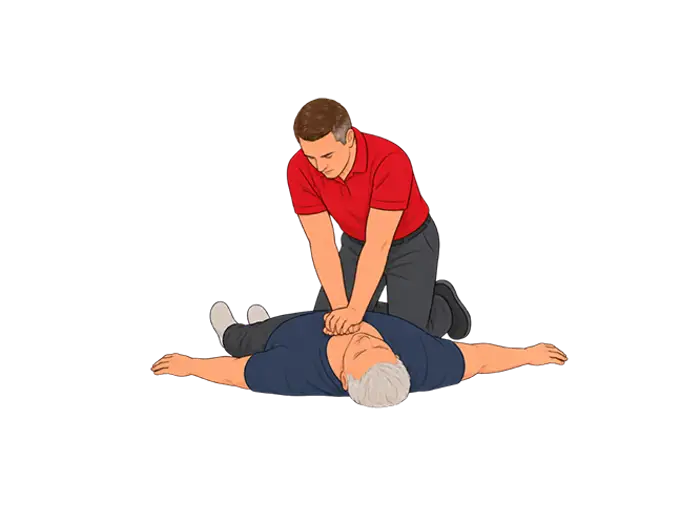
1. “How do you know if someone needs CPR?”
CPR is needed when someone is unresponsive and not breathing normally, occasional gasps do not count.
If the person is unresponsive, call 999 immediately, using speakerphone if possible. Assess their breathing while waiting for the call to be answered. If they are not breathing normally, start CPR; the call handler can help you recognise the signs and guide your actions.
For an adult, chest compressions should be delivered at 100–120 compressions per minute, to a depth of 5–6cm. If trained and able, use 30 compressions followed by two rescue breaths. If you cannot give rescue breaths, provide continuous chest compressions.
Safetymen’s Emergency First Aid at Work course includes CPR and emergency response procedures, alongside incident assessment, wound management and shock treatment.
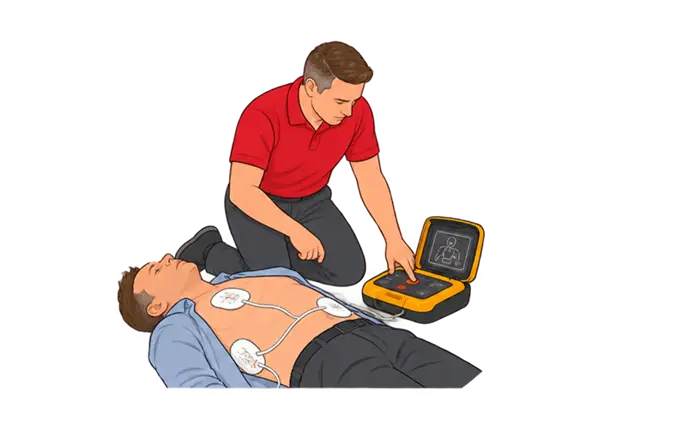
2. “Can I use a defibrillator without training?”
Anyone can use an automated external defibrillator (AED), you do not need a first aid certificate before using one in an emergency.
An AED assesses the heart’s rhythm and advises a shock only when appropriate. Switch it on and follow its spoken and visual instructions. Attach the pads as shown and make sure nobody touches the person during rhythm analysis or shock delivery.
Continue following the device’s prompts, including when to resume CPR.
Here’s a useful question for your next team meeting: where is your nearest defibrillator?
Knowing that there is one “somewhere near reception” is less helpful than knowing its exact location and how to access it. In an emergency, you don’t want to lose valuable time searching for equipment, so make sure everyone in the workplace knows where the nearest AED is kept.
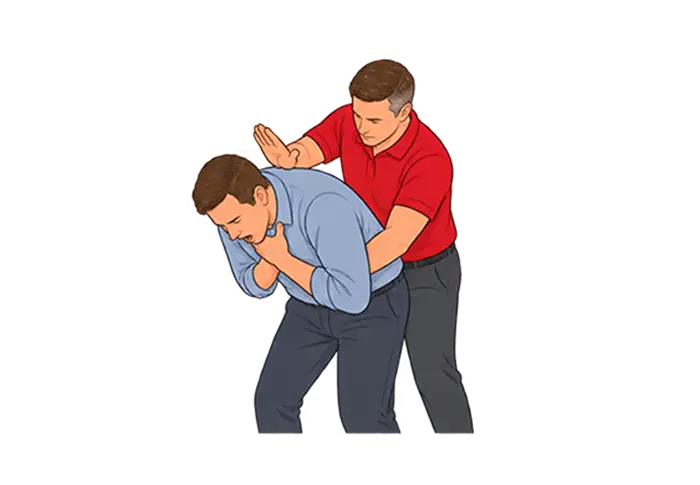
3. “Should you hit someone on the back if they’re choking?”
The first thing to establish is whether the person can cough effectively. If an adult is coughing effectively, encourage them to keep coughing. If they cannot cough effectively, give up to five back blows. If these do not clear the obstruction, give up to five abdominal thrusts.
If choking continues after those abdominal thrusts, call 999 and keep alternating back blows and abdominal thrusts. If the person becomes unresponsive, start CPR and make sure emergency help has been called.
Do not blindly put your fingers into their mouth. Anyone treated successfully with abdominal thrusts or chest compressions should receive a healthcare assessment because injuries can occur.
The technique also depends on who needs help. Babies require a different response, which is one reason people caring for children should consider dedicated paediatric training.
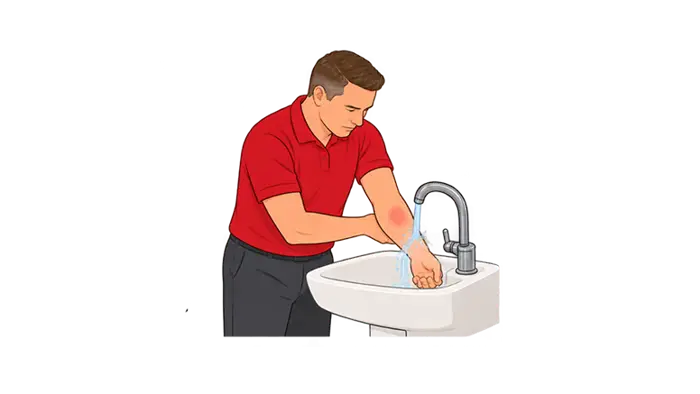
4. “What should you put on a burn?”
For a heat burn or scald, reach for cool running water.
Cool the affected area for 20 minutes, starting as soon as possible. Remove nearby jewellery or clothing unless it is stuck to the skin. After cooling, lay cling film loosely over the burn rather than wrapping it around a limb.
Avoid ice, butter, creams and other home remedies. Keep the rest of the person warm while cooling the injury. Severe burns, chemical or electrical burns, and burns affecting certain areas such as the face need urgent medical attention.
Twenty minutes can feel surprisingly long when you’re standing by a sink. A quick rinse before returning to work is easy to imagine, especially during a busy shift.
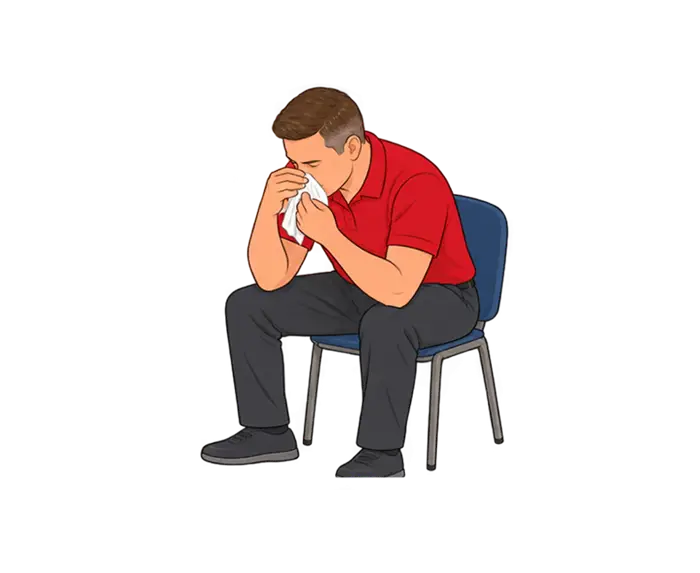
5. “Should you tilt your head back during a nosebleed?”
It’s advice plenty of us remember hearing as children. The correct position is to sit down and lean forward.
Keep the mouth open and pinch the soft part of the nose, just above the nostrils, for 10–15 minutes, breathing through the mouth. Leaning forward helps prevent blood running down the throat.
Seek urgent assessment if bleeding lasts longer than 10–15 minutes, seems excessive, follows a blow to the head, or the person feels weak, dizzy or has difficulty breathing.
Good first aid involves explaining what you’re doing, keeping the person calm and recognising when further help is needed. Knowing a technical term helps less than being able to communicate clearly.
A lot of what we think we know about first aid comes from things we were told growing up. Knowing what’s actually recommended means you’re less likely to rely on old advice when something happens.
6. “Which first aid course does my workplace need?”
This question deserves more attention than simply choosing the shortest or closest option.
Employers should base their arrangements on a first aid needs assessment. Employers also need to think about cover during holidays, sickness and different shifts. HSE guidance explains how this assessment informs the equipment, facilities and personnel required.
Safetymen offers a one-day Emergency First Aid at Work course and a three-day First Aid at Work course, with training available in the classroom or at client premises. The appropriate option depends on your assessment and the level of provision your workplace needs.
If you’re responsible for booking training, start with what your team could encounter and the cover you need to provide. Then discuss those requirements with the training provider.
“I think I know”, to knowing where to start...
You don’t need a medical background to learn first aid. You do need the opportunity to ask questions, practise techniques and understand when to call for help.
Perhaps you’ve never attended a course. Perhaps you got taught in secondary school years ago and can remember the recovery position more clearly than the CPR sequence. Either way, identifying a gap in your knowledge gives you somewhere to start.
Safetymen provides first aid training in Clacton-on-Sea, Essex with options including Emergency First Aid at Work, First Aid at Work, First Aid at Work Refresher and Paediatric First Aid.
Explore Safetymen’s courses and upcoming dates, or contact the team to discuss suitable first aid training for your workplace.